
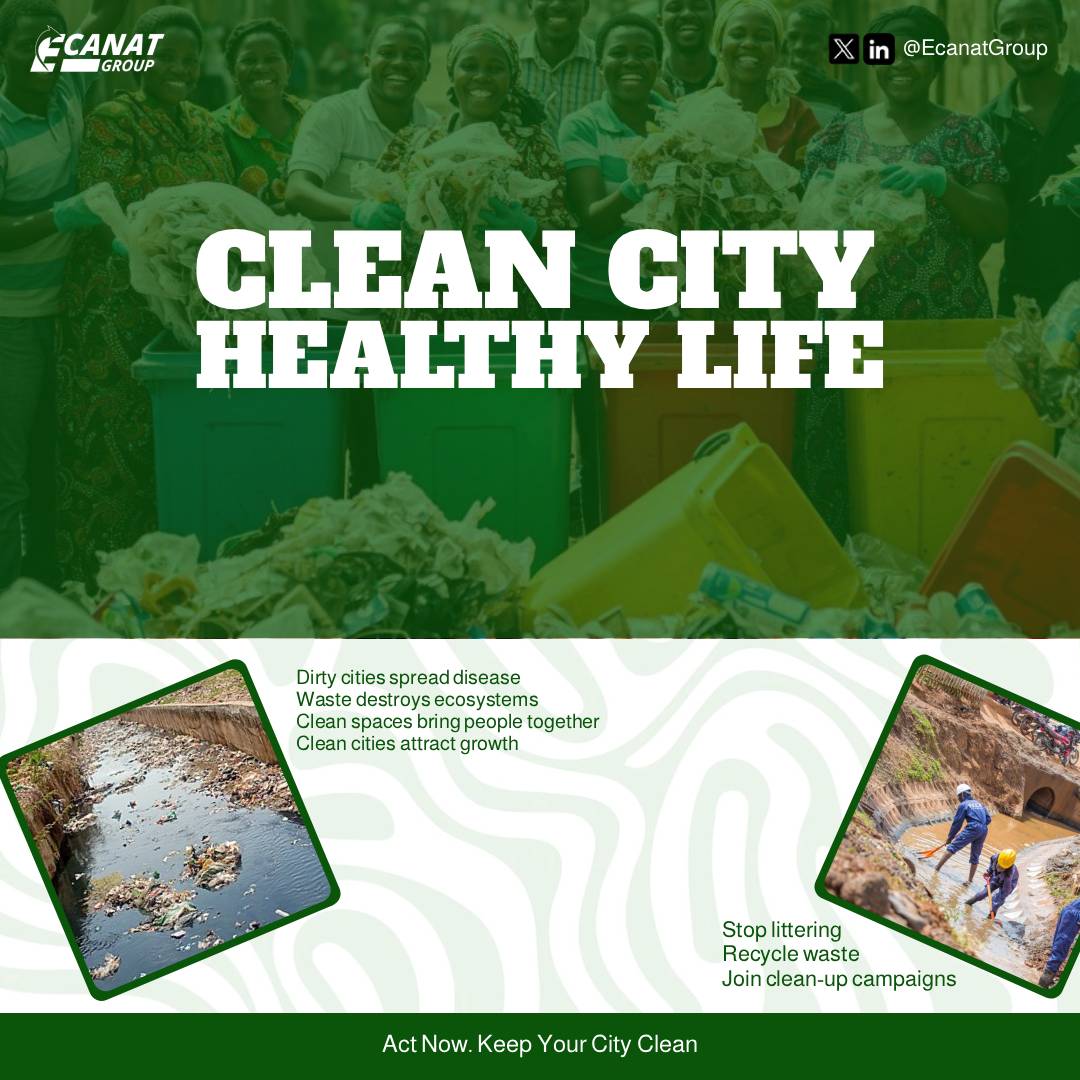
Clean cities are more than a matter of appearance. They are essential to public health, environmental protection, economic growth and the well being of communities.
As Uganda’s towns and cities continue to grow, the pressure on urban systems, particularly waste management, is increasing. ECANAT Group, a Uganda based consultancy focused on sustainable development, urbanization, environmental management and community resilience, highlights the importance of building clean, inclusive and sustainable urban spaces.
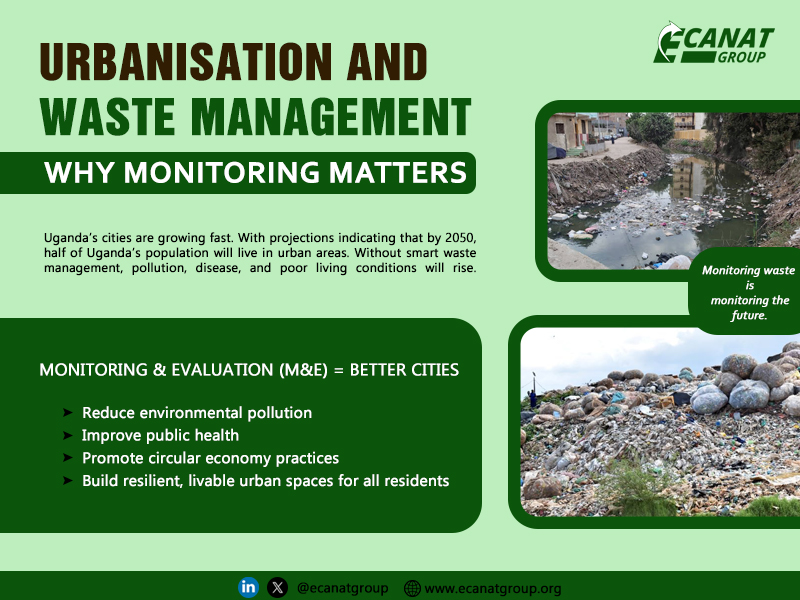
Poor waste management can have serious consequences. Uncollected waste can clog drainage channels, pollute water sources and create conditions that increase the risk of disease. ECANAT Group has noted that rapid urbanization can outpace waste management infrastructure, contributing to overflowing dumpsites, polluted rivers and poor sanitation, with vulnerable communities often bearing the greatest burden.
A clean city, on the other hand, provides a healthier environment for residents. Proper waste collection and disposal help reduce pollution and protect water, soil and air. ECANAT Group’s environmental and climate action work includes sanitation and hygiene support, waste management, water quality monitoring and environmental pollution assessment.
Clean cities can also support economic development. Well maintained urban areas are more attractive to residents, visitors and businesses. A cleaner environment can strengthen tourism, encourage investment and create opportunities for communities while contributing to more resilient urban systems.
But keeping cities clean cannot be left to governments and waste management companies alone. It requires active participation from residents, businesses, community organizations and other stakeholders.
Simple actions can make a difference. People can avoid littering, separate waste at source, recycle where possible and take part in community clean up activities. ECANAT Group’s approach to urban waste management emphasizes community engagement, waste segregation, recycling and composting, alongside partnerships between public and private sector actors.
Monitoring also has an important role to play. Cities need reliable information to understand how much waste is being generated, how much is collected and where illegal dumping is taking place. According to ECANAT Group, monitoring and evaluation can help cities measure waste collection coverage, service efficiency, environmental impact and citizen participation, allowing authorities and partners to improve waste management systems based on evidence.
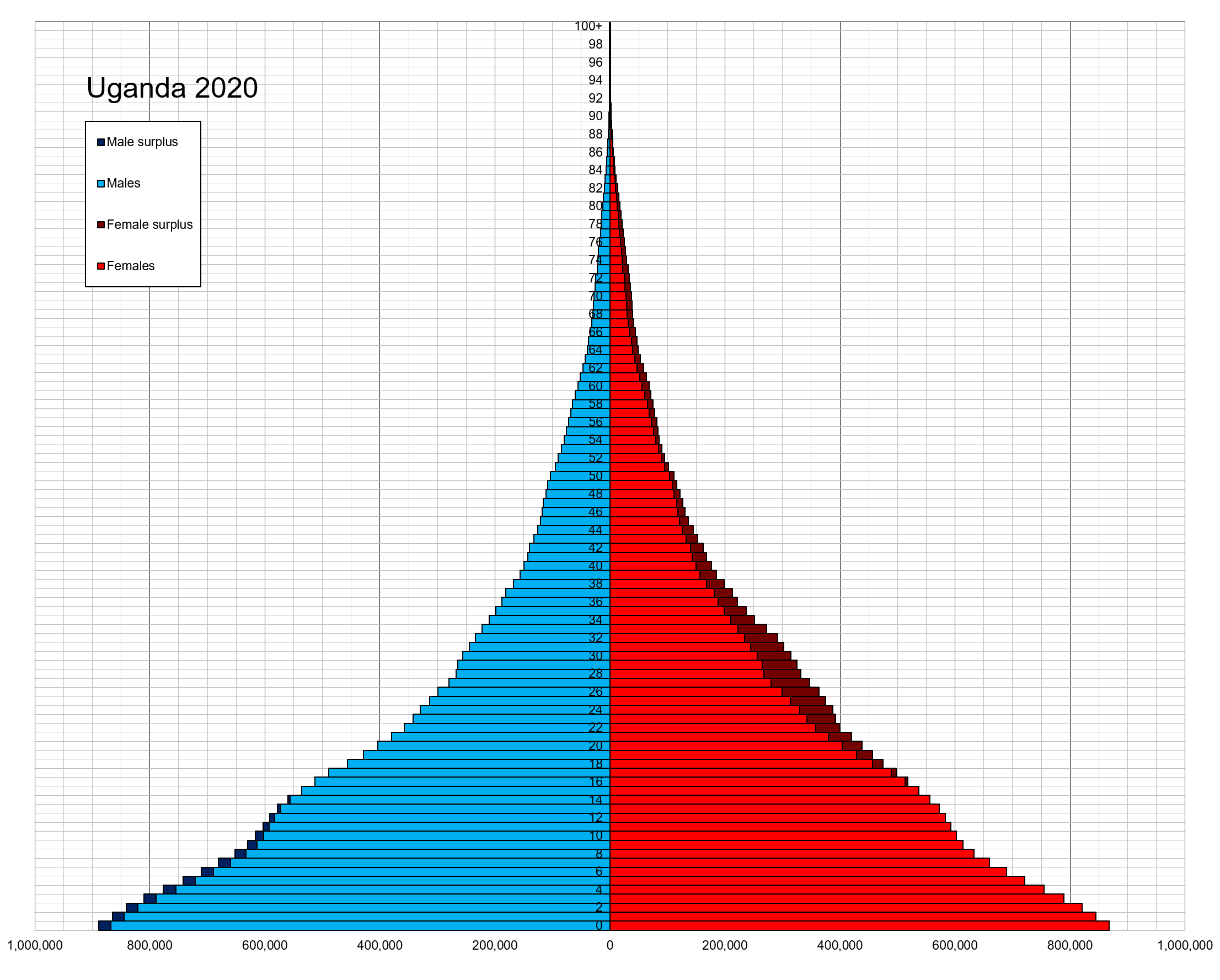
The need for cleaner cities becomes even more important as urban populations grow. Sustainable urban development requires systems that protect the environment while ensuring that communities have safe, inclusive and resilient places to live. ECANAT Group identifies urbanization and service delivery as one of its key areas of work, with a focus on evidence based solutions that support stronger urban systems and sustainable communities.
Ultimately, a clean city is about more than removing rubbish from streets. It is about protecting human dignity, preventing disease, preserving natural resources and creating an environment where communities can thrive.
Every resident has a role to play. Every properly disposed piece of waste matters. Every clean street, protected waterway and community clean up contributes to a healthier future.
Clean cities mean healthy lives, stronger communities and sustainable growth. The time to act is now.